English
  German
  French
  Italian
  Spanish
  Portuguese
  Japanese
  Thai
Thai  Polish
  Dutch
Dutch  Romanian
  Greek
Greek  Czech
Czech  Hungarian
  Swedish
  Bulgarian
  Croatian
  Finnish
  Slovak
  Lithuanian
 How to Replace a 2006 Honda Civic Hybrid Battery
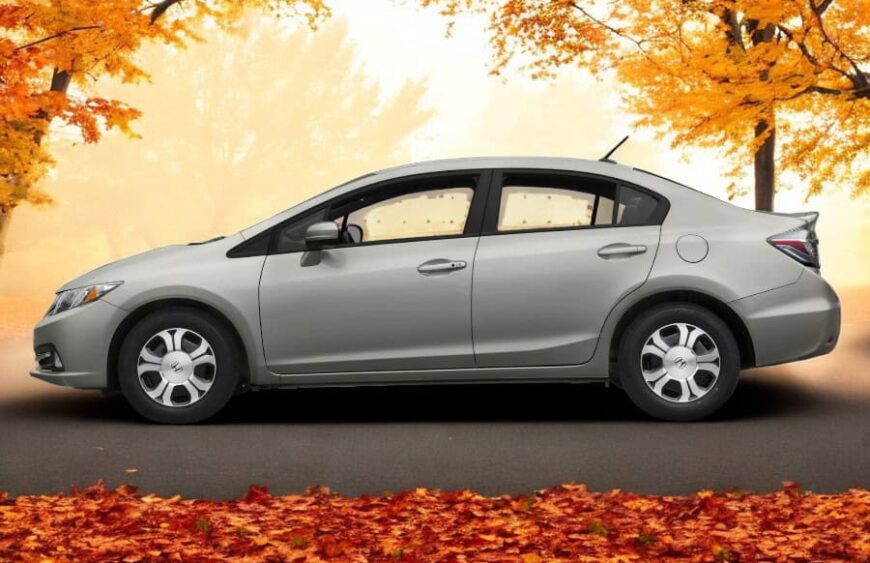
How to Replace a 2006 Honda Civic Hybrid Battery
A large battery pack powers a hybrid car’s electric drive motor system. However, it also has a normal 12-volt battery system that supplies power to all the other systems.
Hybrid cars demand a new set of driving skills from their owners. For instance, mastering the art of accelerating away from stops slowly enough to maximize the role of the electric motor is a key skill that can significantly enhance your driving experience.
Battery Replacement
A hybrid battery does not last forever; you must get a new one when it dies. Fortunately, the battery is fairly easy to replace in most vehicles, and many confident do-it-yourselfers can do this themselves. To begin, check the owner’s manual to determine your vehicle’s battery size and find out where the positive and negative posts are. It is important to match the size and location of the new battery with the old one so that there is no short circuit or electrical damage.
Once you have found the correct replacement, loosen the battery retaining clamp and remove the cable from the negative terminal (-). Once this is done, pull up on the lower cushion of the rear seat and locate the 10mm bolt at the passenger’s left hip. Loosen this and remove the bolt, then lift the cushion to remove it from the car.
Remove the retaining clamp on the positive terminal and use a terminal cleaner or wire brush to clean up any corrosion. Once the new battery is in place, re-secure the clamp and attach the red cable to the positive post. Once you have reattached the positive cable, tighten the bolt and then use the negative clamp to retighten it. Be careful not to short-circuit the battery, and once you are finished, test the new battery.
For hybrid car owners struggling to get a good return on their investment, a new battery could be the solution. Not only can it prolong your vehicle’s life by several years, but it can also enhance its resale value.
By promptly addressing issues like a swollen battery case or leaking batteries, you’re taking a proactive step toward maintaining your hybrid system’s performance. Remember, most hybrid systems will give you plenty of warnings that the battery is starting to go bad. So, don’t ignore these signs; immediately take your hybrid vehicle in for battery service if you see any of these symptoms.
Battery Reconditioning
When a battery can no longer hold a charge or provide power to the vehicle, it must be replaced. However, reconditioning can be a cost-effective alternative that extends the life of a hybrid battery and saves you from expensive replacements. You’re being resourceful and saving money by recognizing the need for a battery replacement before it fails and addressing warning signs like a swollen battery case, corrosion on the terminal posts, or slow starting.
While reconditioning a hybrid battery can be challenging, it is not impossible. Various methods exist for reconditioning batteries, but the most popular involves adding water to the cells. This method uses pure water to restore the electrolyte levels and extend the battery’s lifespan. To do this, first, you must remove the battery cover and drain the contents of each cell. Next, add four cups of water and four ounces of Epsom salt to the battery. This solution will neutralize the acid in each cell and make the battery usable again.
A reconditioning battery will need to rest for some time, typically a few hours to a day. This rest period helps to balance the voltage levels of each battery cell and prepares it for a conditioning charge. A conditioning charge involves charging the battery at a controlled current and voltage, typically below its maximum capacity. This process helps to redistribute and activate the lithium ions within the battery, improving its performance.
Reconditioning a hybrid battery can be difficult, but it is possible with the right tools and knowledge. Before beginning the battery reconditioning process, you must remove the battery from your car and set up an area where you can work safely. You will need a multimeter or voltmeter, a battery charger with reconditioning mode, and safety gear such as chemical-resistant gloves and safety goggles. You will also need an empty bucket and a half-pound of baking soda to neutralize the battery’s acid. Once you have prepared your workspace, follow the manufacturer’s instructions to complete the reconditioning process.
Battery Testing
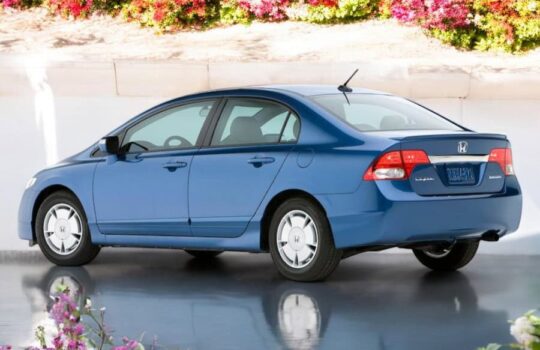
Honda’s hybrid system is a little more refined this year. A fully charged battery pack can operate on electricity alone for short periods under specific conditions, like cruising on a flat surface at a steady speed. This allows the electric motor to do most of the work, rather than the gas engine. The gas engine only provides torque when the car needs it. This helps it to consume less fuel. The hybrid system also uses the electric motor to drive a portion of the air-conditioning compressor when the car is at a stop, further helping to save gasoline.
The car also has a new digital display showing how much energy the hybrid uses or returns to the battery. Braking moderately hard will light up the green LEDs that indicate regenerative braking is occurring. This, in turn, is sending energy back to the battery. Braking harder activates the conventional brakes, which also help to send energy back to the hybrid battery.
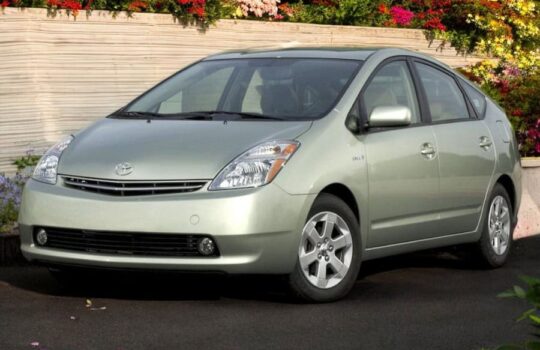
Despite these improvements, unlike Toyota’s popular Prius, the Civic hybrid still cannot move away from a stop under its power. The Honda hybrid’s gas engine and electric motor are hooked up in the same transmission. The Prius, by contrast, has two separate power sources connected at different points in the transmission. This allows one of the engines to be driven while the other is shut off and vice versa.
The Civic hybrid can, however, pull away from a stop under very specific circumstances. It requires a driver willing to accelerate and cruise like a grandmother, slowing the vehicle down enough to minimize the role of the gasoline engine and maximize the electric motor’s contribution. It will also help if the driver is more patient, as it takes the Civic hybrid longer than a normal car to accelerate from a dead stop.
Battery Installation
Hybrid car batteries don’t last forever; if yours is dying, you should replace it as soon as possible. If your hybrid battery has been under warranty, you should be able to have the replacement cost covered by the manufacturer. However, if your hybrid battery has been in service for over eight years, you must pay the full price to replace it. This can be costly, but it’s better to install a new hybrid battery than risk driving a dead one.
Most hybrid cars have a large battery pack that powers the electric drive motors and a smaller 12-volt battery to run accessories and gauges. The smaller battery is usually only used to start the engine when the larger IMA battery is below its minimum charge (or in extreme cold). It will also run the electronics for the IMA system, so it must be kept charged.
If you’re unsure whether your hybrid battery is still good, check it using a voltmeter. Turn off the car and connect the voltmeter to the battery-positive post. Read the voltage, and the battery is fine if it’s higher than 12.0 V. It’s probably bad if it’s lower.
In most hybrid cars, the battery is located under the rear seat. To get to it, remove the back seat, then identify and remove a 10mm bolt at the passenger’s left hip. Lift the seat cushion and pull up on the front edge of the lower cushion. Once you’ve removed the cushion, you can remove the seatback.
The battery in a 2006 Honda Civic hybrid is held in place by two tabs attached to the metal clip in the middle of the battery tray. You must remove this clip and pull up the little tabs to release them. Once the battery is removed, be careful not to touch any exposed terminals. Remember that removing the terminals will clear your radio presets. You will need to reenter the security code to reset them.